
Why Triple-Calibrated Sieve Sorting Matters for Export Pebbles
An insider breakdown of the industrial calibration procedures used at Luxora Stone's Morbi plant to ensure millimeter precision, zero quarry dust, and strict sizing consistency across repeat container shipments.

Aarav Sharma
Senior Material Specifier · Luxora Stone
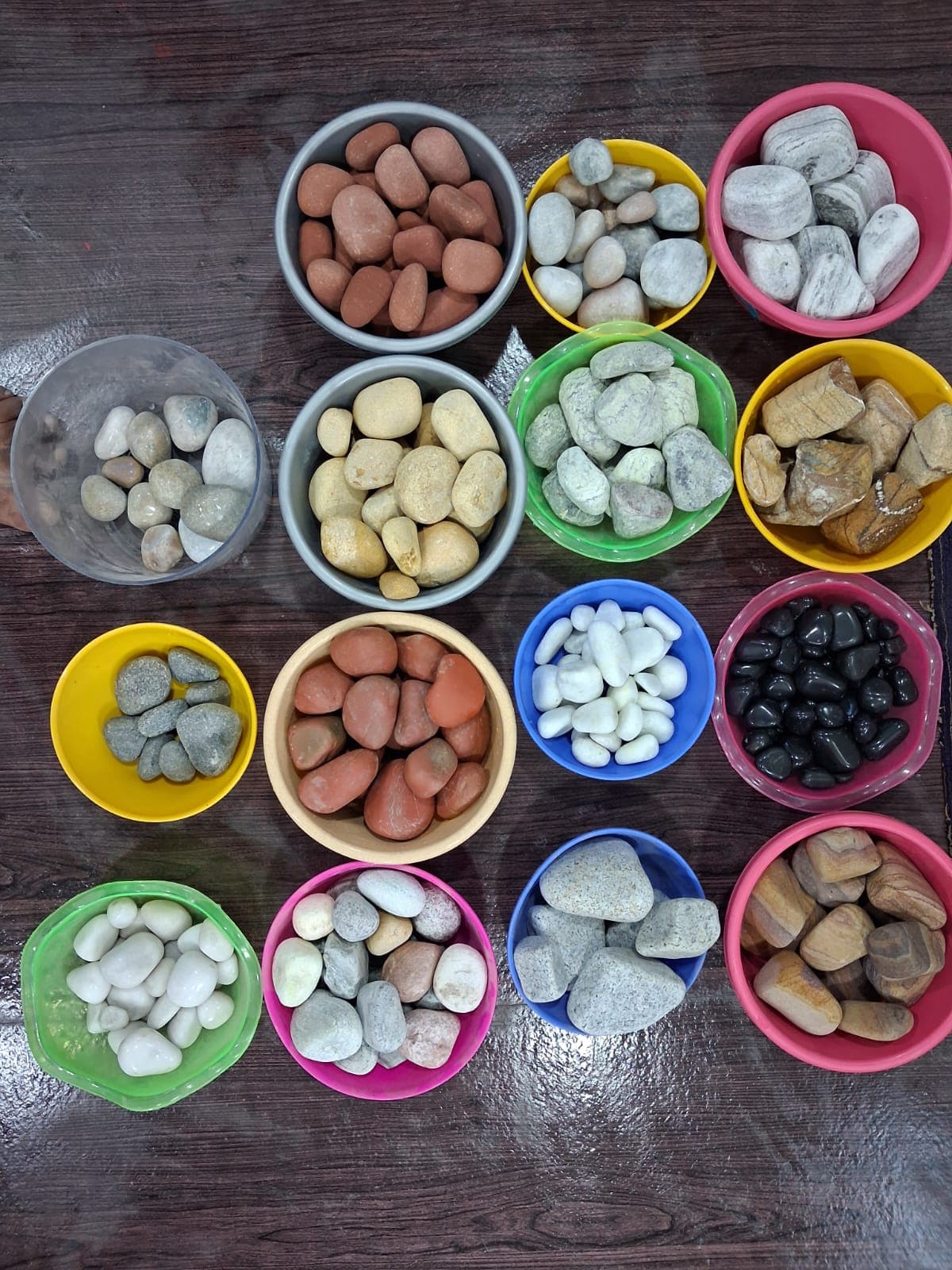
Vibratory sieve grading test bowls displaying calibrated multi-color natural pebbles
Executive Takeaways for B2B Buyers
- •Uncalibrated raw quarry stone contains up to 25% oversized or undersized stones, leading to customer disputes.
- •Triple-deck vibratory screens separate stones through mechanical mesh openings with strict ±2mm sizing tolerances.
- •Rotary water washing flushes out clay, loam, and silt particles to deliver clean, dust-free aggregate.
- •Hand-sorting conveyor stations inspect and discard fractured, chipped, or off-color stones prior to final bagging.
1. The Sizing Challenge in Natural Aggregate Sourcing
Natural pebbles extracted from riverbeds and alluvial terraces arrive with unpredictable size distributions. When international importers receive uncalibrated bulk loads, smaller stones filter to the bottom while large rocks migrate to the top, a phenomenon known as aggregate segregation.
In precision applications like exposed aggregate concrete, resin-bound driveway surfacing, and retail bagged products, size consistency is essential for uniform resin consumption and visual aesthetics.
2. The Luxora Triple-Sieve Grading Pipeline
Our facility in Morbi, Gujarat operates industrial-scale vibratory screeners equipped with woven wire screens manufactured to ISO 3310-1 and ASTM E11 specifications.
Stones pass across three sequential sizing tiers: First, a scalping screen removes oversized river rock; second, the primary sizing screen separates the desired fraction; third, a fine de-dusting deck removes sub-size gravel and grit.
| Commercial Grade | Screen Mesh Size (Top) | Screen Mesh Size (Bottom) | Tolerance Allowance |
|---|---|---|---|
| Micro Pebbles (Grit) | 6.0 mm | 3.0 mm | < 3% undersize |
| Fine Pebbles | 20.0 mm | 10.0 mm | < 5% out-of-spec |
| Medium Pebbles | 40.0 mm | 20.0 mm | < 5% out-of-spec |
| Large Garden Stones | 80.0 mm | 40.0 mm | < 5% out-of-spec |
| Landscape Cobbles | 150.0 mm | 80.0 mm | < 3% out-of-spec |
Frequently Asked Technical Questions
How is stone sizing verified before container loading?
Our QC team samples 5 random bags per pallet using laboratory test sieves and digital calipers. Batches must achieve at least 95% compliance within the millimeter grade before receiving dispatch authorization.
Ready to Import Container Loads from India?
Connect directly with our Morbi export desk for official FOB Mundra or CIF destination seaport container freight quotations, samples, and technical spec sheets.
Related Export & Architectural Guides
ISPM-15 Pallets & Packaging Specifications for Stone Importers
An engineering overview of export packaging systems designed to withstand 40+ days of ocean transit, high sea humidity, forklift handling, and stringent global port phytosanitary inspections.
The Complete Guide to Importing Decorative Pebbles from India
A complete operational manual for overseas distributors, landscape contractors, and stone importers sourcing container loads of natural pebbles, river stones, and cobbles directly from India.