
Best Pebbles for Luxury Swimming Pool Coping & Wet Decks
A material performance guide for aquatic engineers, pool contractors, and resort designers on choosing chemical-resistant, barefoot-safe pebbles for infinity pool overflow channels, wet decks, and beach entry lagoons.

Rajesh V. Patel
Head of International Logistics · Luxora Stone
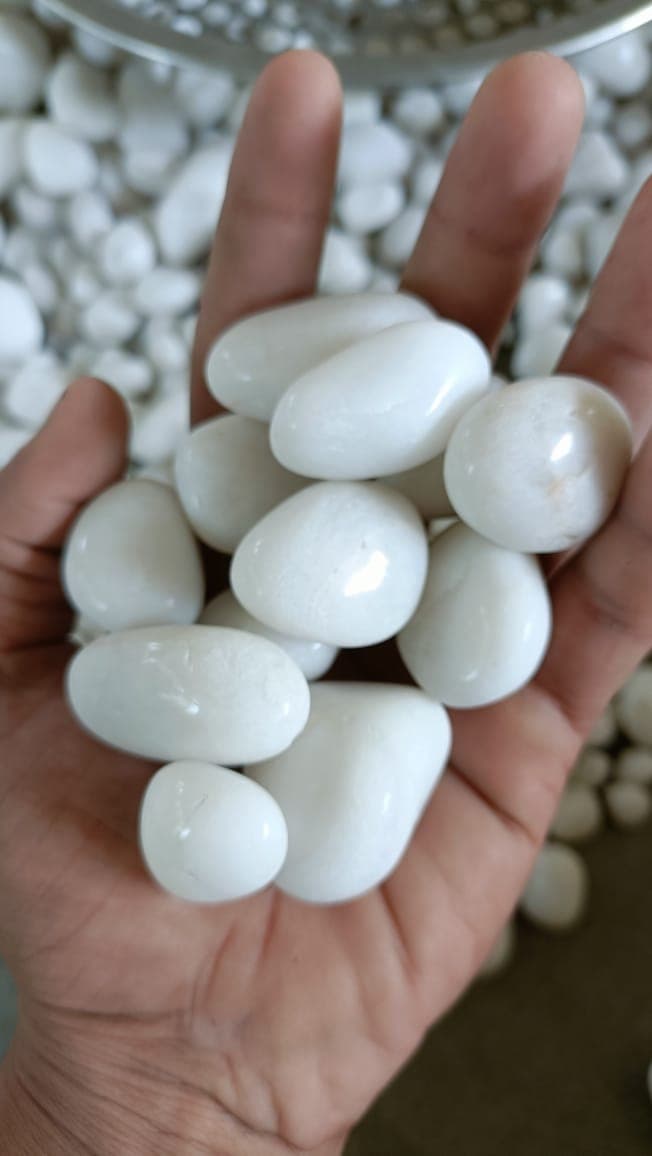
Hand-inspected polished white river pebbles specified for resort infinity pool coping
Executive Takeaways for B2B Buyers
- •Natural river and beach pebbles must undergo thorough mechanical tumbling to remove sharp cleavage edges.
- •High silica content (SiO₂ > 92%) ensures inert resistance against chlorine, pool acid (pH 7.2-7.8), and saltwater chlorinators.
- •Black polished pebbles create a high-contrast reflective mirror effect in infinity pool overflow troughs.
- •Super white and cream beach pebbles remain comfortable under direct sunlight, minimizing thermal absorption.
1. Chemical Resistance in Chlorinated & Saline Environments
Pool coping pebbles endure continuous exposure to treated pool water, sanitizing salts, calcium hypochlorite, and solar ultraviolet radiation. Porous or calcium-carbonate-dominant stones can degrade, pit, or discolor under fluctuating pH levels.
Luxora Stone's Beach Series and Polished River Pebble collections are selected from dense quartz and silica-rich mineral deposits boasting Mohs hardness ratings of 6.5 to 7.0 and water absorption rates under 0.45%. They remain chemically unaffected by pool chemistry.
2. Wet Deck Friction & Barefoot Safety
For beach-entry lagoons, splash pads, and pool surrounds where barefoot pedestrians walk continuously, pebble selection requires a precise balance between smooth rounded contouring and slip resistance.
Tumbled unpolished or semi-polished matte pebbles provide tactile grip even when submerged or wet, meeting commercial slip-resistance criteria without abrasive edges.
| Pebble Type | Finish Profile | Slip Resistance (Wet) | Optimal Pool Zone |
|---|---|---|---|
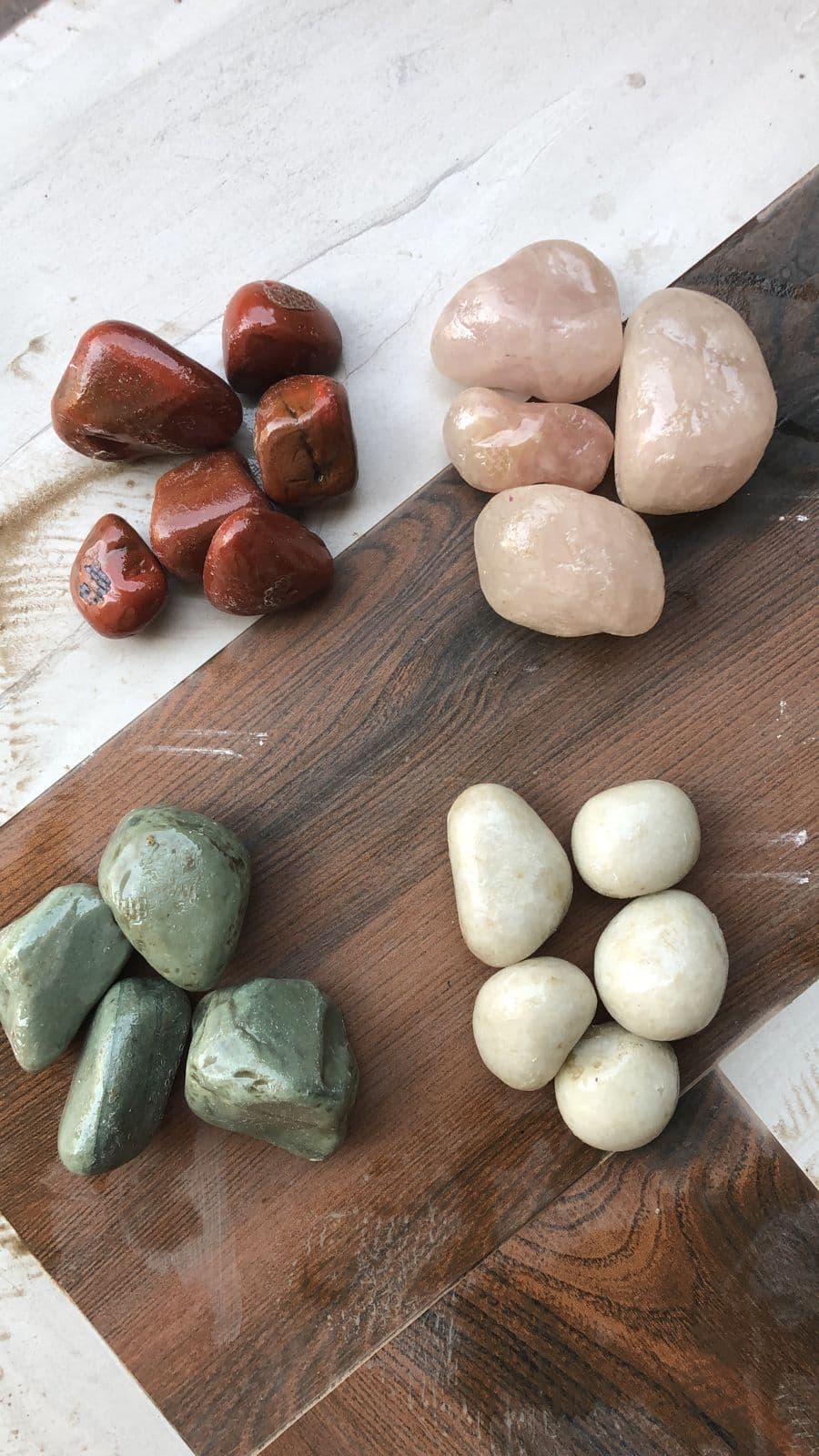
| Beach Series White | Natural tumbled smooth | High (Class C) | Beach entry, sun shelves, deck perimeter |
| High Gloss Black Wet | Waxed mirror polished | Medium (Wet trough) | Overflow drains, reflecting troughs, vanishing edges |
| Tumbled Gray River | Matte river tumbled | High (Class C) | Main pool deck surrounds, stepping borders |
| Exotic Yellow Agate | Semi-polished river worn | High (Class B/C) | Water feature spouts, waterfall splash zones |
Frequently Asked Technical Questions
Can pool pebbles be loose or should they be resin-bound?
Both methods are widely used. Loose pebbles in 20-40mm are placed inside perimeter overflow troughs for easy cleaning and maintenance. In pool deck paving and zero-depth beach entries, 3-6mm or 6-10mm pebbles are bound with UV-stable polyurethane resin to create a seamless, non-slip porous floor.
Will black polished pebbles stain white pool plaster?
No. Genuine natural basalt and quartz black pebbles from Luxora Stone are 100% naturally colored throughout the stone body without artificial dye coatings, ensuring zero pigment leaching into pool water.
Ready to Import Container Loads from India?
Connect directly with our Morbi export desk for official FOB Mundra or CIF destination seaport container freight quotations, samples, and technical spec sheets.
Related Export & Architectural Guides
Decorative Stones for Landscape Architecture: Specifier's Guide
A technical reference for landscape architects, urban planners, and luxury property developers on selecting calibrated pebble gradations, calculating tonnage, and ensuring long-term aesthetic durability.
Terrazzo Aggregates & Quartz Grit: Architectural Sourcing Guide
A technical material guide for terrazzo artisans, industrial flooring contractors, and resin manufacturers on specifying crushed marble chips, silica sand, and micro quartz powders for seamless architectural floors.