
Decorative Stones for Landscape Architecture: Specifier's Guide
A technical reference for landscape architects, urban planners, and luxury property developers on selecting calibrated pebble gradations, calculating tonnage, and ensuring long-term aesthetic durability.

Aarav Sharma
Senior Material Specifier · Luxora Stone

Architectural landscape design utilizing calibrated river pebbles and decorative stepping stones
Executive Takeaways for B2B Buyers
- •10-20mm pebbles provide optimal barefoot comfort around courtyards and residential walkways.
- •20-40mm and 40-80mm stones resist displacement from commercial leaf blowers and heavy stormwater runoff.
- •Natural stone mulch permanently eliminates decaying organic bark replacements, conserving soil moisture and reducing irrigation demand by up to 35%.
- •Install permeable geotextile weed barrier fabric beneath stone beds to prevent weed emergence and ground sinking.
1. Calibrated Size Grading: Matching mm Dimensions to Application
In high-end architectural landscaping, size variance cannot be left to rough quarry guesswork. Specifying calibrated millimeter bands ensures visual coherence, foot stability, and reliable drainage.
Luxora Stone subjects all raw extractions to multi-deck vibrating screen decks to guarantee 95%+ grading conformity within the specified millimeter envelope.
| Size Band (mm) | Visual Profile | Optimal Application | Foot Traffic Suitability |
|---|---|---|---|
| 10 - 20 mm | Fine, textured, compact | Zen gardens, tree pits, patio borders | High comfort for barefoot walking |
| 20 - 40 mm | Bold, defined contours | Garden pathways, planter topping, mulch beds | Stable walking with footwear |
| 40 - 80 mm | Architectural focal specimen | Dry river beds, water features, swales | Non-traffic decorative zones |
| 80 - 150 mm | Natural river cobbles | Retaining borders, pool margins, erosion control | Perimeter boundary defining |
2. How to Calculate Stone Tonnage for Landscape Beds
To estimate the required metric tonnage for any project area, multiply the square meter surface area by the recommended laying depth, then multiply by the bulk density factor (approximately 1.6 MT per cubic meter for rounded river pebbles).
Rule of thumb for laying depth: depth should be approximately twice the maximum stone diameter (e.g., a 20-40mm pebble bed should be laid at 60-80mm depth to prevent fabric exposure).
| Pebble Size | Recommended Depth | Square Meters per Metric Ton (Approx.) |
|---|---|---|
| 10 - 20 mm | 40 mm (1.6 inches) | 15 - 16 m² per MT |
| 20 - 40 mm | 60 mm (2.4 inches) | 10 - 11 m² per MT |
| 40 - 80 mm | 100 mm (4.0 inches) | 6 - 7 m² per MT |
| 80 - 150 mm | 150 mm (6.0 inches) | 4 - 4.5 m² per MT |
Frequently Asked Technical Questions
Do decorative pebbles retain heat in hot desert climates?
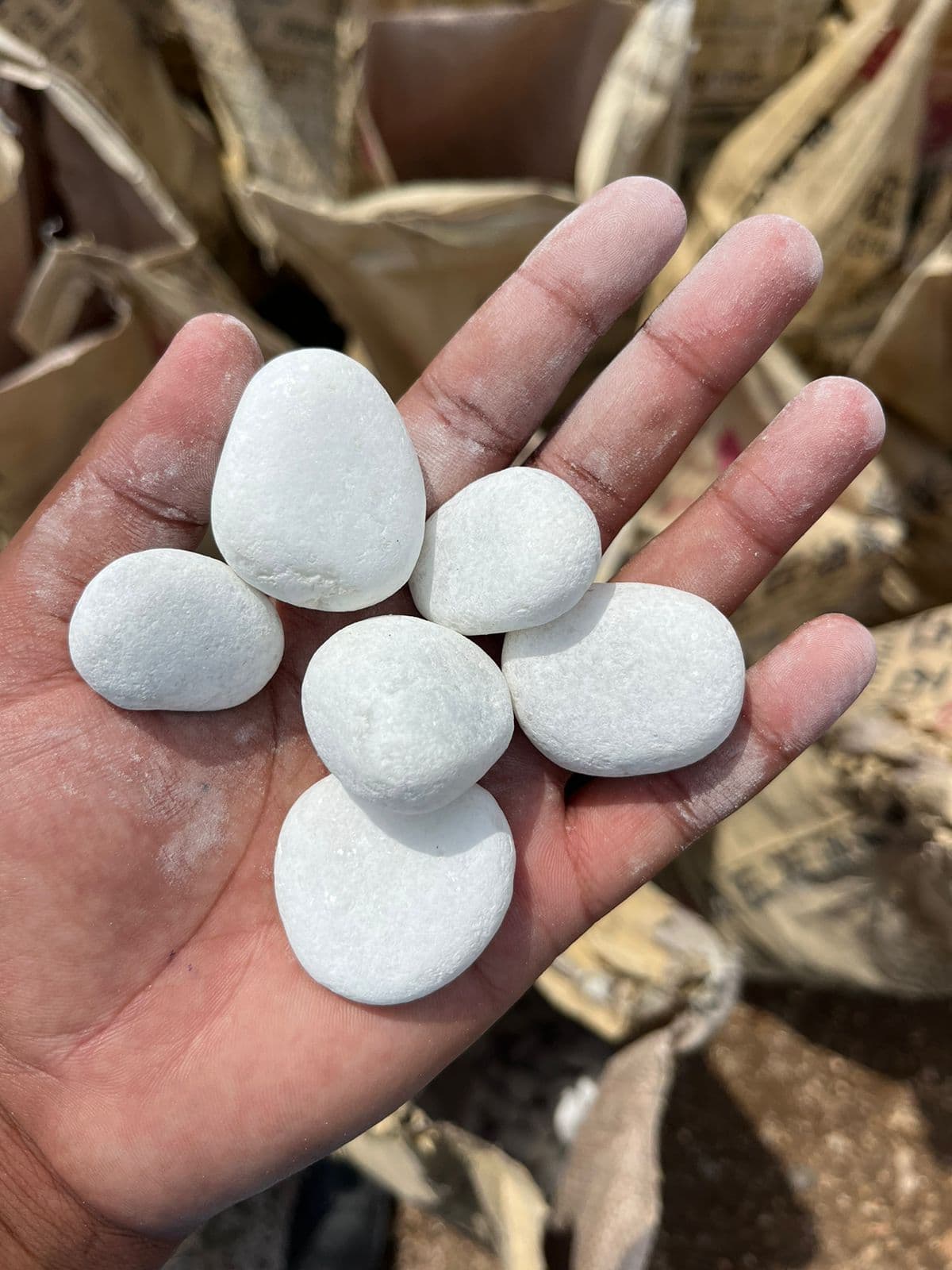
Light-toned pebbles like Super White, Snow White, and Tumbled Cream reflect high solar radiation and remain substantially cooler than dark asphalt or decomposing dark mulch, making them ideal for Middle East and Mediterranean projects.
How do you prevent weeds from penetrating pebble ground covers?
Always install a premium commercial non-woven geotextile fabric (120-150 GSM) directly over compacted subsoil prior to spreading stone. The fabric allows rainwater permeability while physically blocking weed emergence.
Ready to Import Container Loads from India?
Connect directly with our Morbi export desk for official FOB Mundra or CIF destination seaport container freight quotations, samples, and technical spec sheets.
Related Export & Architectural Guides
Best Pebbles for Luxury Swimming Pool Coping & Wet Decks
A material performance guide for aquatic engineers, pool contractors, and resort designers on choosing chemical-resistant, barefoot-safe pebbles for infinity pool overflow channels, wet decks, and beach entry lagoons.
Why Triple-Calibrated Sieve Sorting Matters for Export Pebbles
An insider breakdown of the industrial calibration procedures used at Luxora Stone's Morbi plant to ensure millimeter precision, zero quarry dust, and strict sizing consistency across repeat container shipments.